
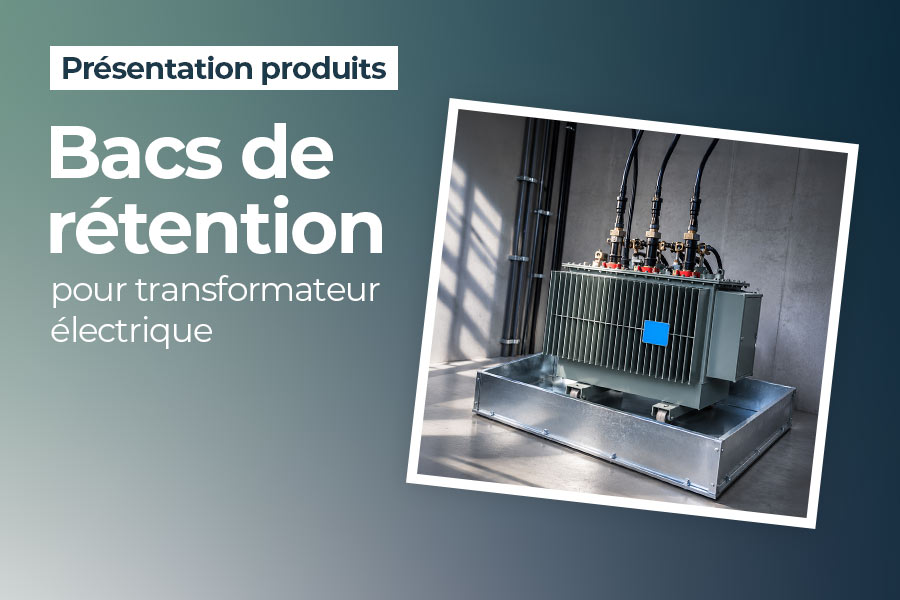
In a high-voltage/low-voltage (HV/LV) electrical sub transformer substation , the presence of an oil-filled transformer requires consideration of the risks associated with a potential dielectric leak. A spill containment tray provides a solution for collecting this liquid, protecting the equipment, and minimizing the risk of pollution. Depending on the sub ’s configuration, it can also help mitigate fire risk.
What exactly is the purpose of a transformer containment pan? In what situations is it necessary? Which standards should be considered, and how do you choose a model suited to the specific requirements of your installation? ADEOS provides the key answers.
TABLE OF CONTENTS:
- Overview of the Retention Tank for Electrical Transformers
- The Role of a Spill Containment Bin in a transformer substation
- Use Cases for a Spill Containment Tray
- Regulations
- Choosing a Spill Containment Pan for an Electrical Transformer
- The ADEOS Line of Spill Containment Trays
- How to Properly Size a Spill Containment Tank
What is a containment pan for an electrical transformer?
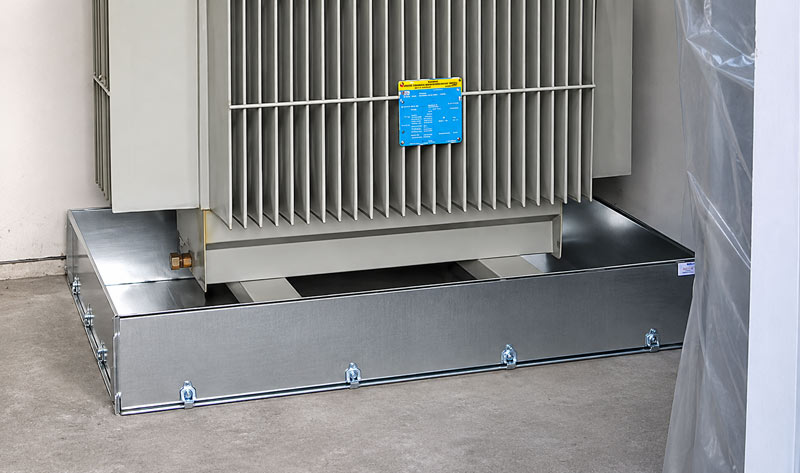
An oil transformer containment pan is a piece of equipment designed to collect the dielectric fluid that may escape from a transformer in the event of a leak or incident.
Installed beneath the transformer, it forms a containment area that prevents the oil from spilling directly onto the floor of the substation or into the surrounding environment.
Immersed transformers use a dielectric fluid to provide, among other things, electrical insulation and cooling for their components. This fluid must be taken into account in the design and safety measures of the installation.
Spill containment pans are therefore particularly important pieces of equipment for HV/LV substations equipped with liquid-dielectric transformers.
What is the purpose of a retention tank in a transformer substation ?
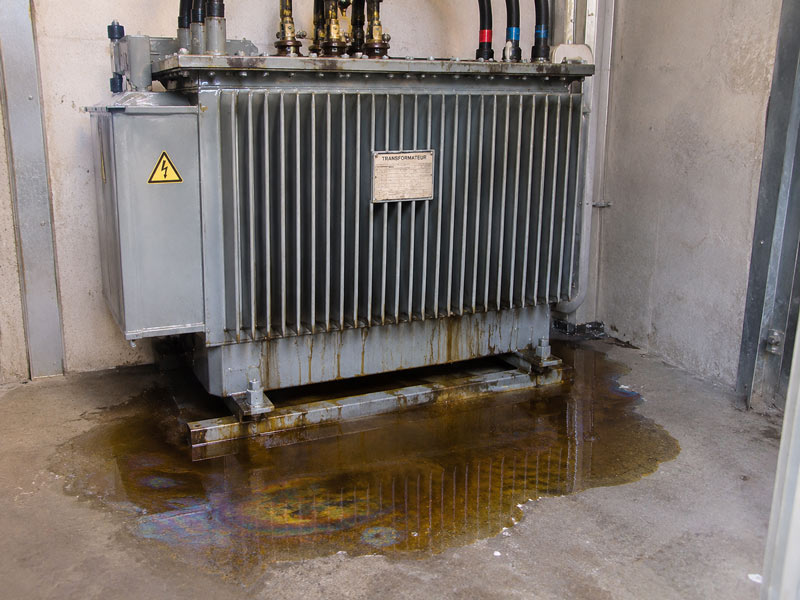
The primary function of a containment tray is to contain the dielectric fluid in the event of a transformer leak. However, its role is part of a broader effort to ensure the safety of electrical infrastructure.
Preventing Pollution Risks
A dielectric oil leak can lead to soil contamination and, depending on the substation’s surroundings, water contamination.
The containment tray collects the liquid at the source to limit its spread and facilitate its recovery as part of an appropriate response.
Protecting Electrical Systems
By containing the liquid, the spill containment tray helps protect the immediate surroundings of the transformer and the substation infrastructure.
It thus serves as a preventive measure against the consequences of an accidental leak.
Contribute to fire risk management
Some containment pans incorporate a passive fire protection system.
This is particularly true of models equipped with a natural extinguishing grid, designed to allow the dielectric fluid to flow into the pan while promoting the separation of the liquid from the flames.
This additional feature must be taken into account when the facility’s risk assessment requires enhanced fire protection.
When should a transformer containment pan be installed?
The issue of moisture retention arises whenever an electrical substation houses a transformer containing a dielectric fluid.
It must be considered during the design of a new transformer substation, as well as during the renovation or replacement of an existing transformer.
Constraints can vary significantly from project to project.
In a new substation, the dimensions of the space, the transformer’s layout, and the safety features can be planned from the design phase.
In an existing substation, the challenges are often different: narrow access points, staircases, basements, limited passageways, or the inability to transport a monoblock enclosure to its final location.
The selection of a spill containment pan must therefore take into account the transformer's specifications, the installation conditions, and the safety requirements applicable to the substation.
Transformer containment basin: What do the regulations say?
The installation of a containment system for an electrical transformer is part of a set of technical and regulatory requirements designed to protect people, facilities, and the environment.
In France, the NF C 13-100 and NF C 13-200 standards are particularly important references for high-voltage electrical installations, depending on their nature and scope of application.
Is a retention tank required?
The need for a spill containment system depends on the type of installation, the transformer, the liquid used, and the requirements applicable to the project.
In particular, it is important to consider the nature of the electrical substation, pollution prevention requirements, fire risks, and any additional requirements applicable to the site.
It is therefore incorrect to state that an identical containment basin is mandatory for all electrical transformers.
The chosen solution must be determined as part of the technical and regulatory study of the installation, in consultation with qualified professionals.
How do you choose a spill containment tray for an electrical transformer?
The choice of a spill containment tray does not depend solely on the transformer's dimensions. Several criteria must be considered in order to select a solution suited to the actual installation and operating conditions.
- The volume of dielectric fluid to be retained
Retention capacity is an essential criterion.
It must be determined based on the volume of fluid contained in the transformer and the applicable project requirements.
The design must also take into account the configuration of the tank, the possible presence of supports, and other elements that may affect its usable volume. - Transformer dimensions and weight
The enclosure must be compatible with the transformer's dimensions and installation requirements.
The length, width, available height, and weight of the equipment are all necessary data for determining a suitable configuration. - Access and Handling Constraints
In existing substations, accessibility is often a key factor.
When a room is located underground or has narrow passageways, a removable containment tray can facilitate transport and installation.
Depending on site conditions, various assembly systems can be considered. - Mechanical strength and installation conditions
The selection must also take into account requirements for rigidity, stability, and durability.
A galvanized steel containment pan, equipped with a suitable mechanical assembly, can meet the needs of demanding industrial installations.
The indoor or outdoor environment must also be taken into account. - Fire Safety Requirements
When a project requires enhanced protection against fire hazards, a retention tank with a natural extinguishing grid may be the best choice.
This type of device combines the containment function with passive protection, without the use of an active fire suppression system.
Which ADEOS line of spill containment pans should you choose?
As a specialist in metal equipment for electrical infrastructure, ADEOS designs and manufactures three lines of transformer containment pans in Brittany.
Each line is designed to meet specific installation requirements: ease of handling, mechanical strength, or enhanced fire safety.
BDRS: The Removable Retention Tank for Hard-to-Reach Areas
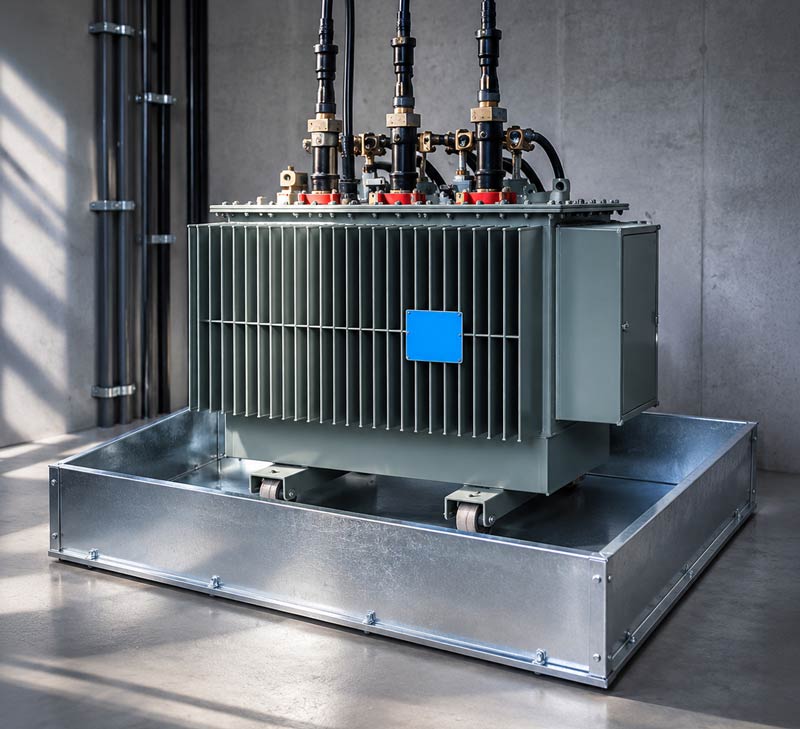
The BDRS is a fully disassemblable spill containment tray, particularly well-suited for indoor installations and electrical enclosures with limited access.
Its design consists of a base and four partitions connected by snap-fit joints, with bolts at the corners.
With lightweight components, it facilitates transport and handling on site, particularly in confined spaces, basements, and renovation projects.
Designed for transformers up to 1,250 kVA, the BDRS prioritizes ease of installation and quick assembly.
Ideal for: indoor HV/LV substations, confined spaces, and transformer renovation and replacement.
Discover ADEOS's BDRS removable retention tank.
BDREN: The Removable Retention Tank Designed for Durability
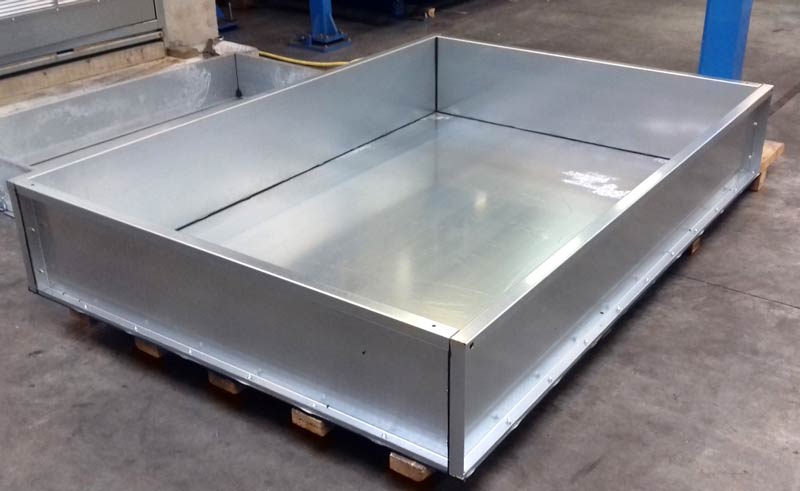
The BDREN combines the advantages of a demountable design with the rigidity of a mechanical assembly using studs and bolts.
Made of raw galvanized steel, it consists of a base and four partitions assembled on site. This design facilitates transport into technical rooms while providing a rigid and stable structure suitable for demanding industrial environments.
The BDREN is suitable for both new installations and renovation projects involving indoor transformer stations.
Recommended for: installations requiring a demountable design with high mechanical rigidity.
Discover ADEOS's BDREN industrial spill containment tray.
BDRGC: Large-Capacity Self-Extinguishing Retention Tank
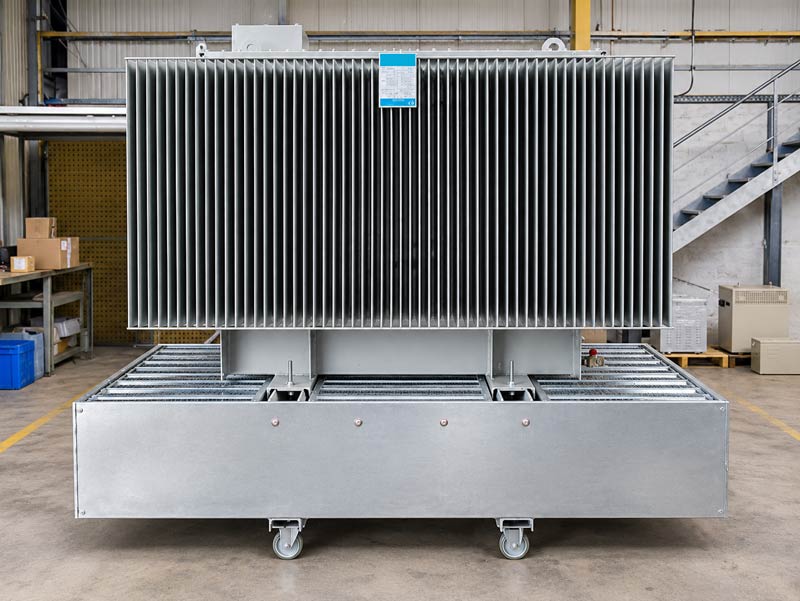
The BDRGC is designed for liquid-insulated transformers that require a containment solution combined with passive fire protection. It incorporates a three-part extinguishing grid designed to facilitate the flow of the dielectric and separate the liquid from the flames. This design promotes natural extinguishment without the need for an active device.
Made of galvanized steel, the BDRGC features a transformer support frame made of galvanized beams. It is available in a standard configuration or with a rolling system.
Depending on the configuration, it can be installed indoors or outdoors. Options such as a drain valve, a hydrocarbon filter, or a prefilter can be added to the system.
Recommended for: facilities requiring high retention capacity and enhanced fire safety measures.
Discover ADEOS's BDRGC natural drainage retention tank.
Choosing the Right Size for Your Retention Tank: Information You'll Need
To choose an appropriate solution, it is important to consider the key characteristics of the transformer and its installation environment.
The dimensions and weight of the transformer, the volume of dielectric material required, the available space in the room, access and handling conditions, and fire safety requirements are the key details that must be provided.
This information helps guide the selection of a product line and configuration that are best suited to the project.
ADEOS, a manufacturer of spill containment pans for electrical transformers
Since 2001, ADEOS has been designing and manufacturing metal equipment in Brittany for energy and industrial infrastructure.
Its experience with high-voltage/low-voltage transformer substations and its expertise in metal fabrication enable it to offer solutions tailored to the technical and operational requirements of electrical installations.
With its three product lines—BDRS, BDREN, and BDRGC—ADEOS helps professionals select spill containment pans tailored to their needs in terms of handling, durability, and fire safety.
Are you looking for a spill containment tray for your oil-filled transformer?
Explore our range of transformer safety solutions or contact the ADEOS team to discuss the right configuration for your project.